Why Ice Hockey Uniform Specifications Need Extra Care
An ice hockey uniform is not simply a loose long-sleeve shirt. It must work over shoulder and elbow protection, move with the player during skating and stick handling, resist contact around the boards, manage heat and moisture, and keep the team identity clear under arena lighting.
For a club buyer, the most important decisions are fabric, construction, fit, sizing, decoration and roster control. A strong design can still fail if the sleeves bind over elbow pads, the body is too narrow for shoulder protection, numbers are difficult to read, or the size chart is treated like ordinary casual clothing.
Sky Zone Impex helps clubs, academies, schools, leagues, retailers and private-label buyers convert their crest, colors and requirements into an approval-ready hockey uniform specification before production begins.
Choosing the Right Hockey Jersey Fabric
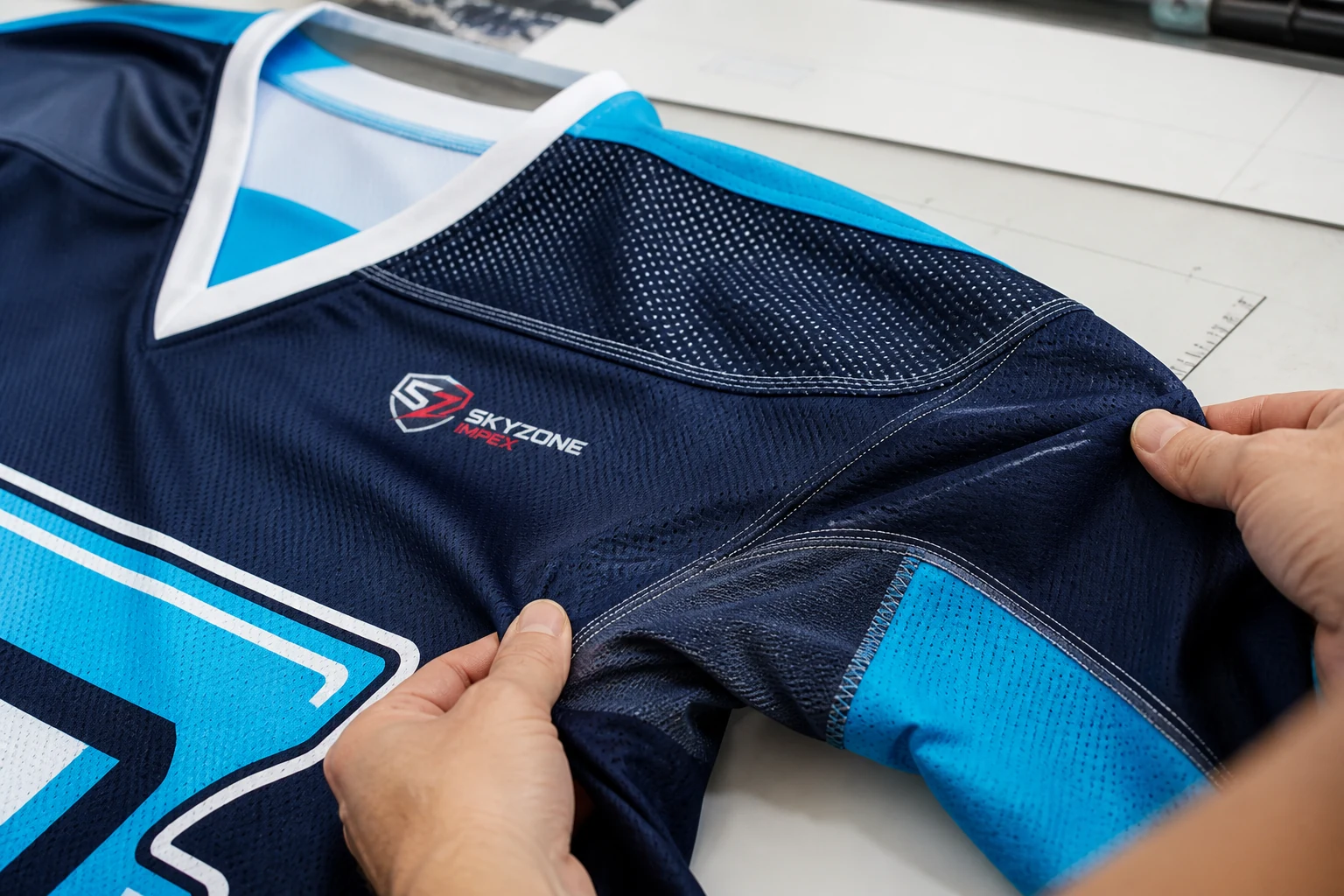
The main jersey fabric should balance durability, breathability, print quality and weight. Polyester mesh is widely used because it allows airflow and works well with sublimation. A tighter interlock or engineered knit can provide a smoother surface and stronger visual finish, while open-hole mesh can be placed in high-heat zones such as the underarms or side body.
Fabric weight should be selected according to the competition level, climate, required durability and desired drape. A very light jersey may feel cool but can lack structure over protective equipment. A heavier construction can look premium and resist abrasion, but it needs well-planned ventilation so the player does not carry unnecessary heat.
Buyers should request confirmation of composition, approximate GSM, mesh structure, stretch, surface finish and color performance. If a programme includes both match and practice jerseys, the two products can use different material specifications while keeping the same visual identity.
- 100% polyester performance mesh for airflow and sublimation
- Stretch or power-mesh gussets for movement
- Reinforced shoulder and elbow zones where required
- Moisture-management and quick-dry options
- Custom fabric weight according to player level and budget
Player Fit: Room for Pads Without Excess Fabric
A player-cut hockey jersey needs enough room for shoulder pads, elbow pads and movement, but more fabric is not always better. Excess width can catch, fold or interfere with the player's arms. Sleeves that are too short expose the protective setup, while sleeves that are too narrow restrict the elbow area.
The pattern should provide a broad upper body, dropped or gear-friendly shoulder shaping, generous armholes and sleeves designed around protection. The body length must remain stable while skating, and side or underarm panels can help control shape and ventilation.
When changing suppliers, do not rely only on labels such as Small, Medium or Large. Compare actual garment measurements with a jersey that already fits the team well.
- Measure the jersey—not the player's bare chest only
- Check chest width with shoulder pads underneath
- Confirm sleeve length and elbow-pad clearance
- Review body length in a skating position
- Approve youth and adult grading separately
Goalie Cut Is a Separate Pattern
A goalkeeper should not simply receive an oversized player jersey. Goalie chest and arm protection requires a wider body, larger armholes and significantly more sleeve volume. The hem, cuff and shoulder proportions also need to work with the goalkeeper's equipment and stance.
Clubs should identify goalkeeper quantities when requesting a quotation and provide the required goalie size or reference garment measurements. Treating goalie cuts separately during artwork and production prevents the crest, striping and numbers from appearing incorrectly scaled on the larger pattern.
How to Build a Reliable Hockey Size Chart
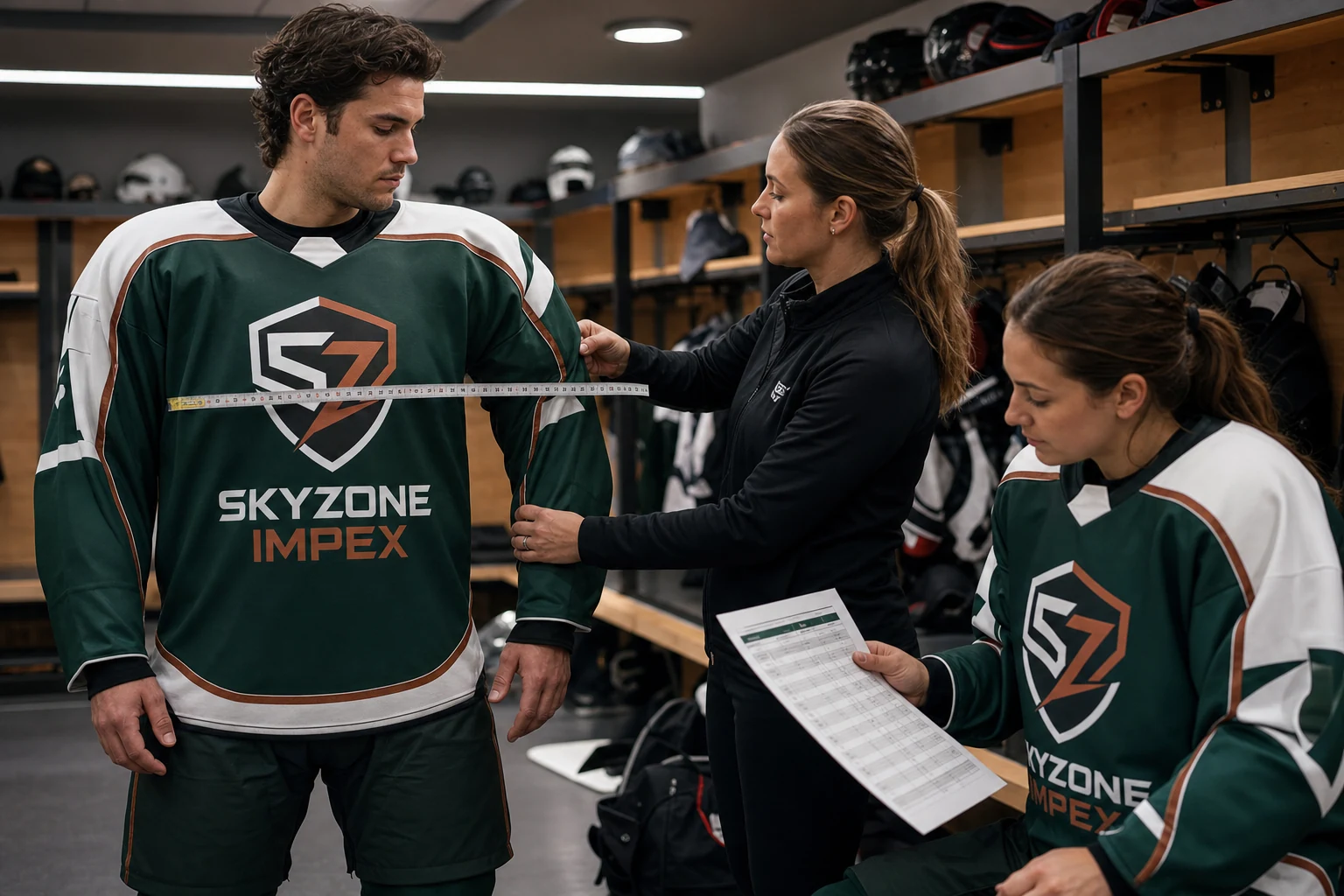
A useful hockey size chart should show finished-garment measurements rather than vague age or body-size suggestions alone. Chest width, body length and sleeve measurement are the minimum practical references. Buyers may also request hem width, shoulder width or bicep width when fit is especially important.
Measure an approved jersey flat using the same method the manufacturer will use. For chest width, measure across the garment at the defined underarm point. For body length, agree whether the measurement starts from the high shoulder point. Sleeve measurement must state whether it is taken from the center back neck, shoulder seam or another fixed location.
Youth sizes deserve particular attention because players of the same age may use different protection and body proportions. A sample or pre-production size set can reduce uncertainty for new club programmes.
Sublimation, Crests, Names and Numbers
Full sublimation allows complex colors, gradients, striping, sponsor marks, player names and numbers to become part of the fabric. It produces no heavy surface layer and is useful for detailed club artwork. Twill applique, embroidery and heat-applied details can add a traditional or premium look, but they change weight, cost and production time.
The artwork approval should show the front, back and sleeves. Confirm crest size, sponsor positions, name-bar dimensions, number font, sleeve-number position, captain marks and collar details. Strong contrast is important because names and numbers must remain readable from a distance under arena lighting.
Roster data should be supplied in a clean table with one row per player. The club should check every spelling, number and size before personalization begins.
- Team crest and sponsor artwork in high-resolution or vector format
- Player name, back number, sleeve number and size in one roster
- Captain and alternate-captain marks clearly identified
- Goalie artwork and sizing listed separately
- Written approval for colors, placements and number style
Coordinating Jersey, Pants Shell and Hockey Socks
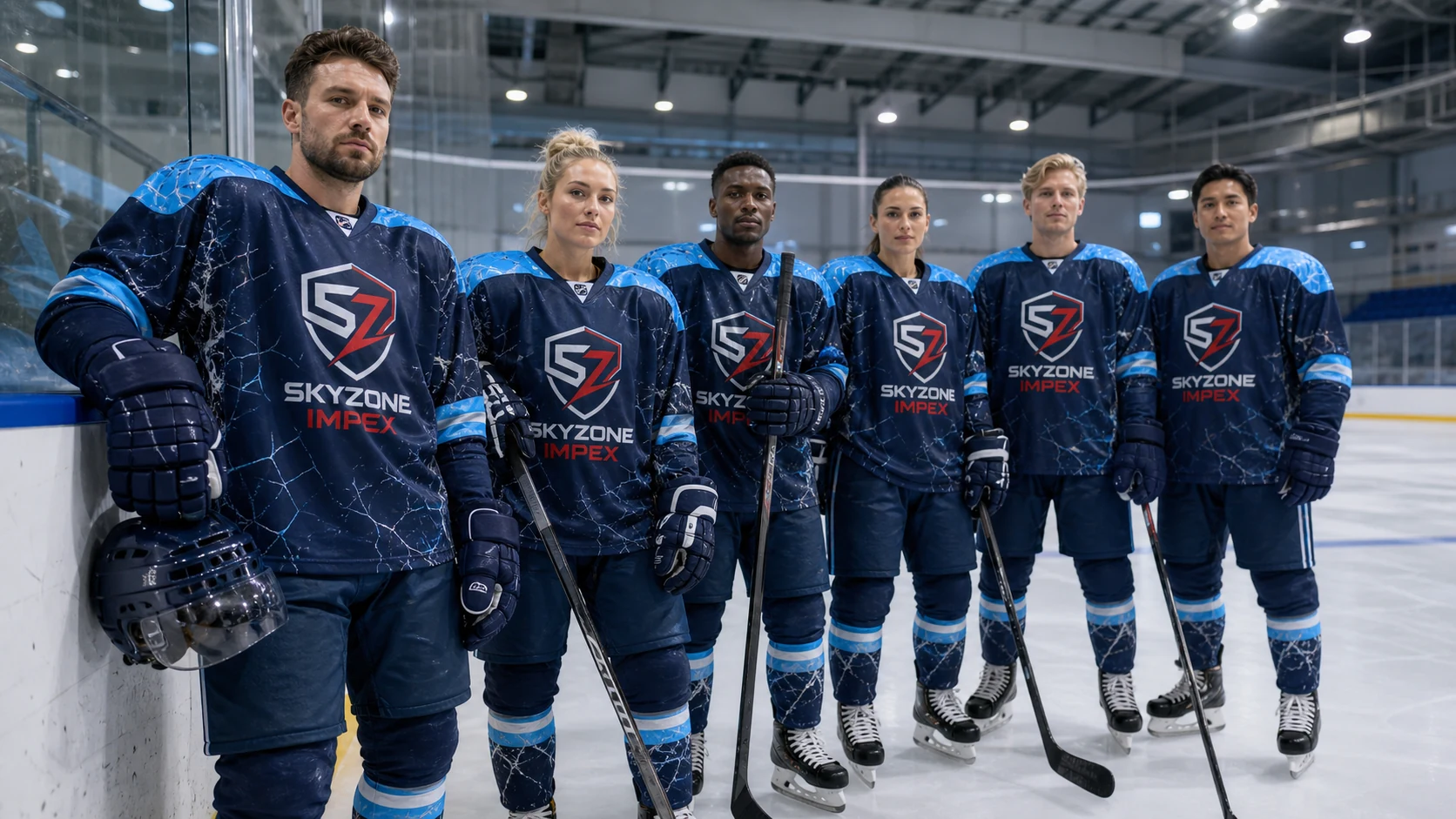
A complete hockey programme looks stronger when the pants shell and socks repeat controlled parts of the jersey design. The goal is not to cover every item with graphics. Consistent striping, accent colors and logo placement create a professional identity without making the uniform visually crowded.
Buyers should confirm whether pants are a shell or a complete padded product, because construction and pricing differ. Hockey socks also require an agreed material, length, cuff construction and color arrangement. Match and away programs can share the same pants while using different jerseys and socks to control cost.
Team Ordering Checklist
A complete brief allows artwork, costing and production planning to move faster. Before requesting a quote, decide whether the order includes home jerseys, away jerseys, goalie cuts, practice jerseys, pants shells, socks or accessories. Provide the total quantity and a realistic destination deadline.
Sky Zone Impex can review reference images, but buyers should explain which details matter: color direction, collar, striping, fabric, fit or decoration. This avoids copying unwanted elements from a reference and helps the design team build an original club-specific direction.
- Club crest, colors and sponsor files
- Quantity by product and design
- Youth, adult and goalie size breakdown
- Complete player roster
- Fabric and decoration preference
- Packing, destination and required delivery date
Sampling, Production and Quality Control
A physical sample is useful when the buyer is introducing a new pattern, fabric, fit or decoration method. The sample should be reviewed over real protective equipment. Comments need to be specific—for example, increase sleeve width by a measured amount or move the crest by a defined distance.
During bulk production, checkpoints can include color and print review, panel alignment, stitching, measurements, roster accuracy, labels, quantities and packing. Final goods should be compared with the approved specification rather than judged only by appearance.
Lead time depends on design approval, material, quantity, personalization, sampling and packing. Clubs ordering for a season or tournament should allow time for approval and shipping instead of treating every programme as an emergency order.
Start Your Custom Ice Hockey Uniform Programme
Send Sky Zone Impex your club crest, colors, product list, quantities, size breakdown, roster, destination and required date. We can prepare a quotation and design direction for approval, then confirm sampling, production and worldwide shipping based on the final specification.
Whether you need a youth club programme, adult league uniforms, goalie jerseys, practice wear or a private-label hockey collection, the best result starts with clear fabric, fit and sizing decisions.
- 1. Send the club brief and quantities
- 2. Select fabric, fit and decoration
- 3. Review mockups and size chart
- 4. Approve a sample when required
- 5. Confirm roster before bulk production
- 6. Complete inspection, packing and dispatch
Buyer FAQ
What fabric is best for custom ice hockey jerseys?
Breathable polyester hockey mesh is a common choice because it supports airflow, durability and sublimation. The best weight and panel structure depend on competition level, climate, fit and budget.
Should hockey jerseys be ordered one size larger?
Do not rely on casual-clothing sizing. Use finished-garment measurements and test the jersey over the player's shoulder and elbow protection.
Is a goalie jersey different from a player jersey?
Yes. A proper goalie cut has a wider body, larger armholes and more sleeve volume to fit goalkeeper chest and arm protection.
Can Sky Zone Impex add names, numbers and sponsor logos?
Yes. Club crests, sponsors, player names, back numbers, sleeve numbers and captain marks can be included according to the approved artwork and roster.
Can we order matching pants shells and hockey socks?
Yes. Jerseys can be coordinated with custom pants shells and hockey socks using matching colors, striping and branding.
Can we approve a sample before bulk production?
Yes. Sampling can be arranged when required. Buyers should test the sample over actual equipment and provide measured, written feedback.
Does Sky Zone Impex ship hockey uniforms worldwide?
Yes. Worldwide export shipping is available. Production and transit estimates are confirmed according to quantity, destination, packing and order specification.