Imported Does Not Automatically Mean Better
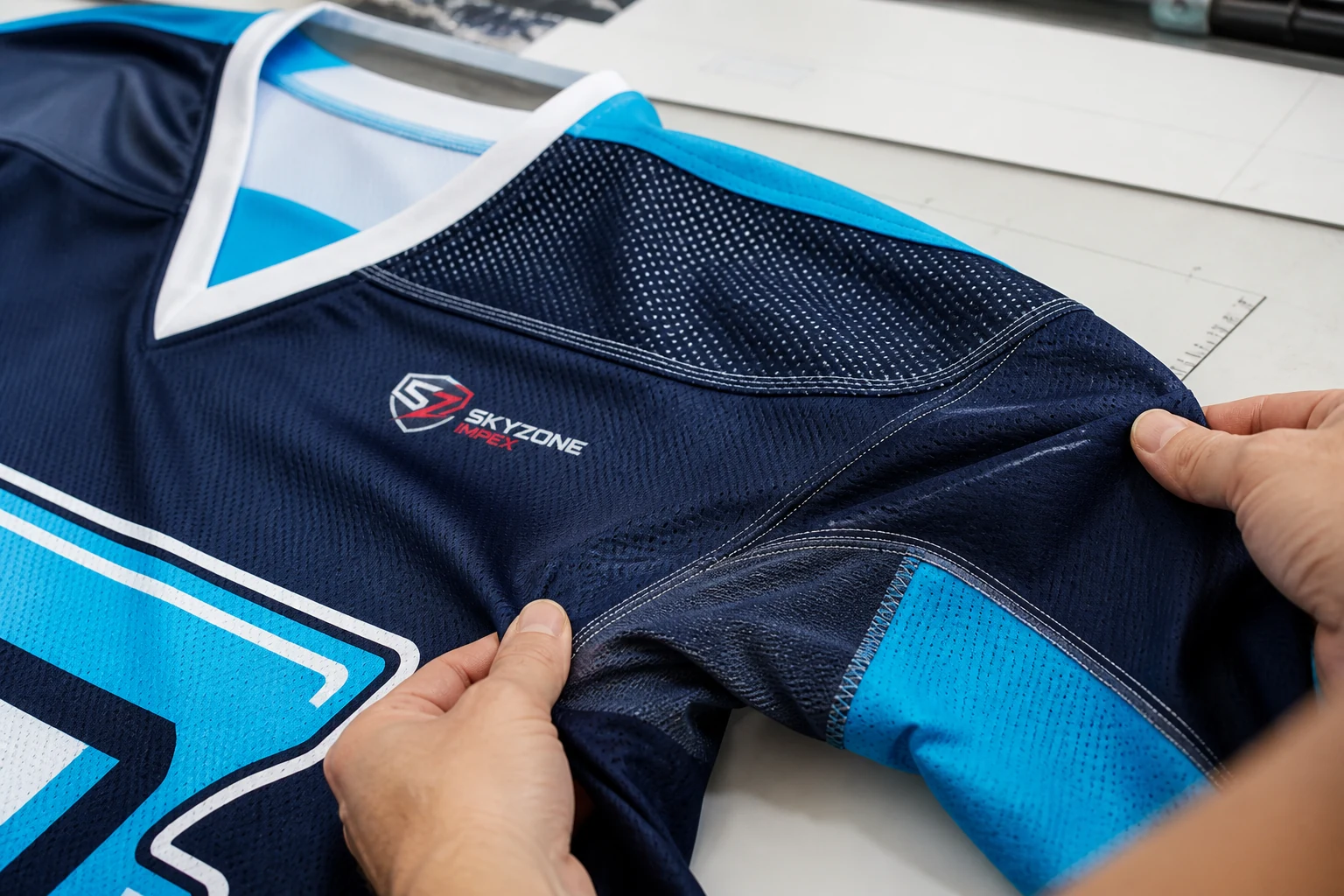
Imported sports fabrics can give buyers access to particular knit structures, finishes, weights, stretch levels and surface qualities that may not be available in every local market. But country of origin alone does not prove that a textile is suitable for professional teamwear.
The right question is not simply whether the fabric is imported. Buyers should ask whether it meets the intended performance, printing, construction, budget and repeat-order requirements. A well-specified local fabric can outperform a poorly selected imported fabric, while a carefully approved imported construction can add real value to a premium programme.
- Confirm fiber composition and knit construction
- Record approximate GSM and usable fabric width
- Review stretch, recovery, airflow and opacity
- Test the selected printing or decoration method
- Keep an approved swatch for bulk and repeat-order comparison
Common Imported Fabrics Used in Sports Uniforms
Most custom sublimated teamwear uses polyester because it supports moisture management, durability and dye-sublimation printing. The exact construction changes the weight, airflow, drape, surface texture and appearance of the finished garment.
Smooth interlock is useful when buyers want crisp artwork and a clean face. Micro mesh and bird-eye structures support ventilation. Stretch polyester or polyester-spandex blends can improve movement in fitted garments and compression panels. Heavier double-knit or reinforced constructions may be selected for contact sports and structured uniforms.
- Polyester interlock for clean sublimation detail and stable construction
- Micro mesh for lightweight breathability
- Bird-eye mesh for visible airflow texture
- Polyester-spandex blends for stretch and recovery
- Double-knit and heavier mesh for contact-sport durability
- Brushed or bonded performance fabrics for tracksuits and warm-ups
Match Fabric Weight and Construction to the Sport
One fabric specification should not be used for every sport. Lightweight football, volleyball and basketball garments need airflow and freedom of movement, while rugby, American football and ice hockey products may require stronger bodies, reinforced zones or heavier constructions.
GSM is useful, but it should not be treated as the only quality measure. Two fabrics with the same nominal weight can behave differently because of yarn type, knit density, finishing and stretch. Buyers should review a physical swatch or sample garment whenever possible.
- Football and volleyball: lightweight breathable polyester with stable print surface
- Basketball: open mesh or interlock with good opacity and drape
- Rugby: stronger knit with recovery and reinforced construction compatibility
- American football: durable jersey body with stretch or mesh zones
- Ice hockey: heavier mesh with room for protective equipment
- Training wear: season-appropriate interlock, tricot, fleece or bonded fabric
Check Sublimation Compatibility Before Bulk Printing
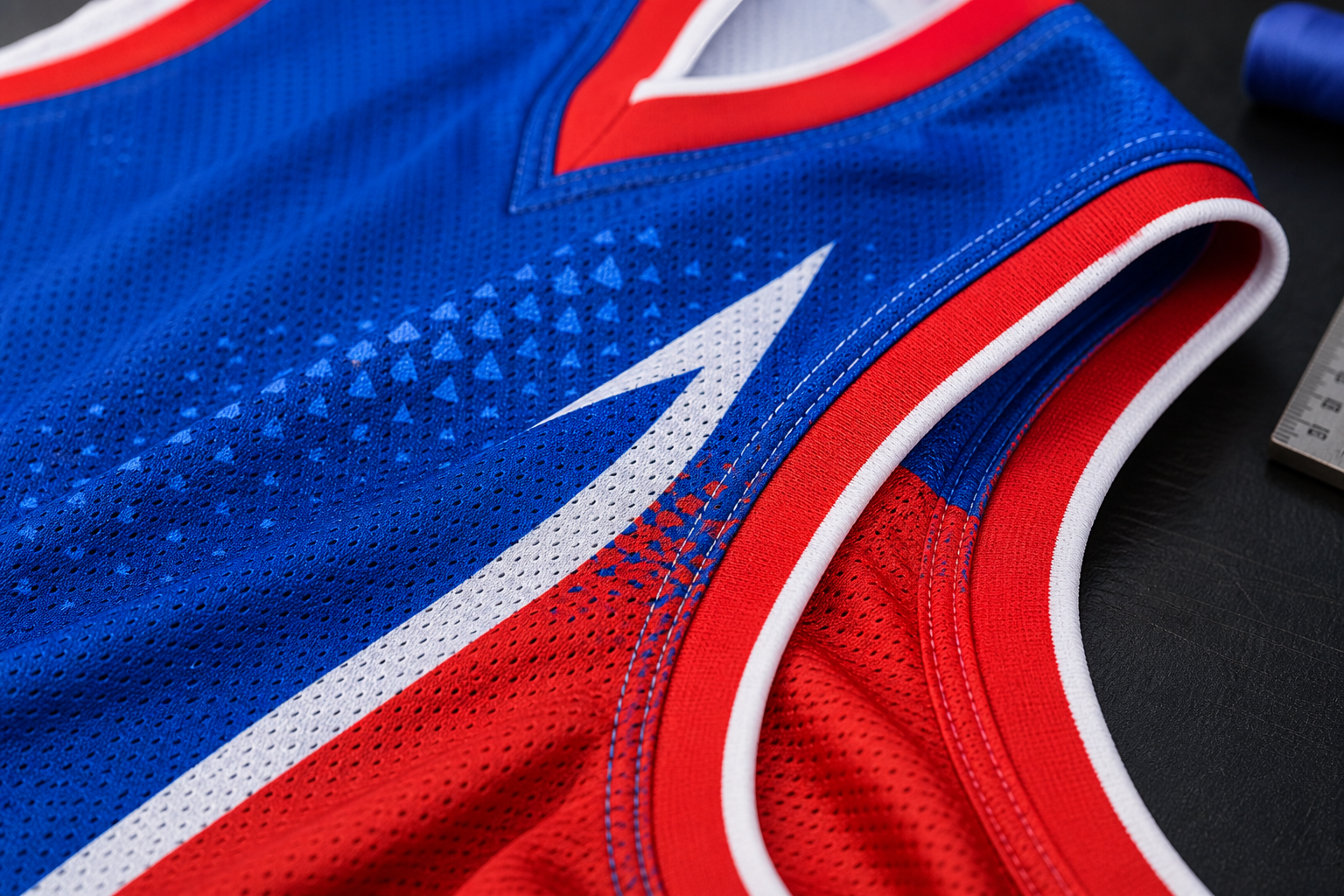
A polyester label does not guarantee identical sublimation results. Fabric whiteness, surface texture, heat response and finishing can affect color strength, fine details and the way artwork appears when the garment stretches.
Before bulk printing, approve a strike-off or sample panel using the actual fabric and artwork. Check dark colors, gradients, logos, small text, number edges and repeated patterns. The test should also reveal unwanted shine, press marks, migration or excessive show-through.
- Use the actual bulk-intended fabric for the print test
- Review colors under consistent lighting
- Check artwork when the fabric is relaxed and stretched
- Confirm front-to-back shade consistency
- Approve logo, name and number clarity before production
Inspect Fabric Rolls Before Cutting
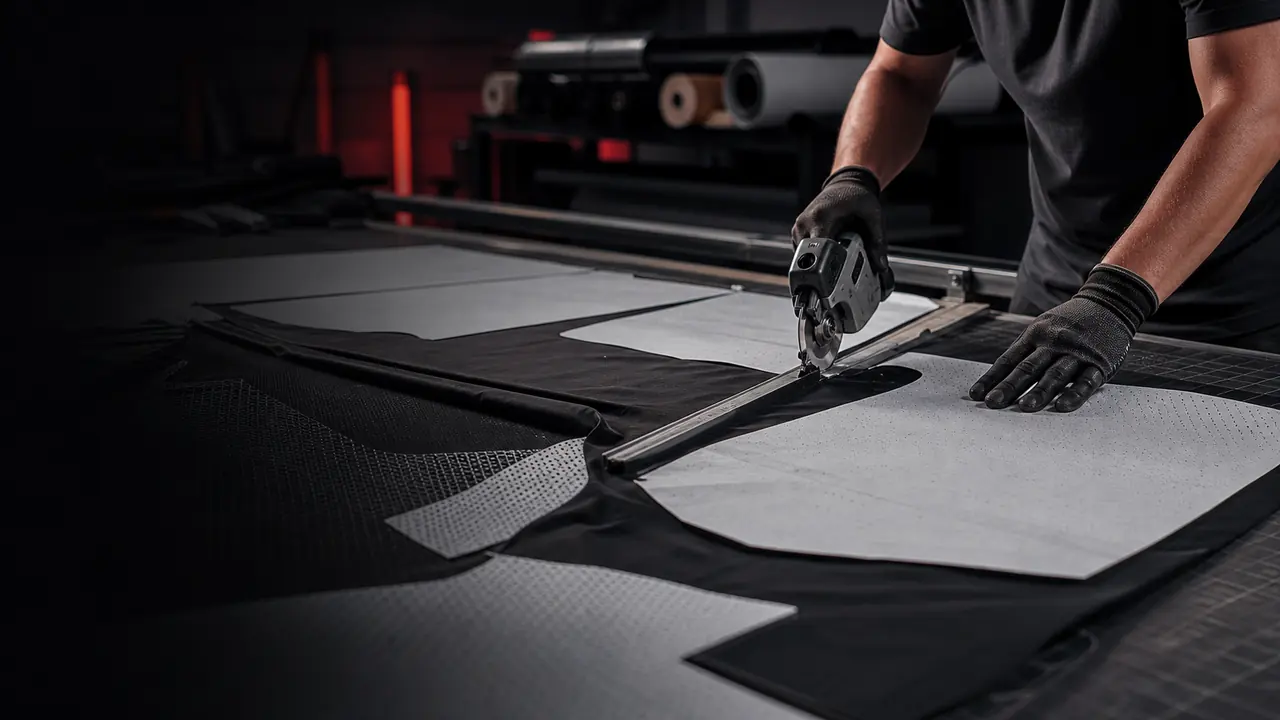
Bulk fabric should be checked before it reaches cutting. Inspection can identify visible knitting faults, holes, oil marks, width variation, shade differences, bowing, unexpected stretch or inconsistent surface finish.
Rolls and dye lots should remain identifiable so panels from visibly different shades are not mixed into one team order. Fabric should also be allowed to relax when required before pattern placement, particularly for constructions that may change after unrolling.
- Check usable width and roll quantity
- Separate visible shade or lot differences
- Inspect for holes, marks and knitting faults
- Review stretch direction before pattern placement
- Allow suitable relaxation before cutting
- Record approved and rejected material clearly
Plan Availability, MOQ and Repeat Orders
Imported fabric can require longer replenishment, higher minimum quantities or more advance purchasing than a readily available local construction. Buyers should discuss fabric availability before promising a delivery date or launching a repeat-order programme.
For a seasonal club or private-label collection, reserve enough material for the approved order and agree how future additions will be handled. Exact shade and surface matching may be difficult across different production lots, so a repeat-order plan is important when teams expect late player additions.
- Confirm fabric MOQ and current stock before sampling
- Include sourcing time in the production schedule
- Ask whether the construction is repeatable next season
- Reserve extra material for approved late additions when practical
- Approve an alternative fabric before an urgent shortage occurs
Send a Fabric-Ready Brief for an Accurate Quote
A useful fabric quotation needs the sport, garment type, quantity, target weight, stretch requirement, climate, artwork method, budget level and delivery country. Reference garments or swatches can help explain the expected hand feel and performance.
Skyzone Impex can review the application, propose suitable imported or locally sourced performance fabrics, prepare artwork and samples, and manage cutting, sewing, personalization, quality control, packing and worldwide shipping. Final material selection is confirmed through availability and buyer approval.
- Sport and garment list
- Quantity and size groups
- Preferred composition, GSM and stretch
- Sublimation, embroidery or other decoration
- Reference swatch or garment when available
- Destination and required delivery date
Buyer FAQ
Are imported sports fabrics always higher quality?
No. Quality depends on composition, yarn, knit construction, finishing, consistency and suitability for the garment. Imported and local fabrics should both be approved against a clear specification.
Which fabric is best for sublimated sports uniforms?
Polyester interlock, micro mesh and bird-eye mesh are common options. The best choice depends on sport, weight, airflow, opacity, stretch, artwork and buyer preference.
What does GSM mean in sports fabric?
GSM means grams per square metre and indicates fabric weight. It is useful for comparison, but knit structure, yarn, stretch and finishing also affect performance and quality.
Can Skyzone Impex source imported fabric for a private-label order?
Imported or locally sourced options can be reviewed according to the requested specification, quantity, availability, budget and delivery schedule. Final fabric is confirmed after buyer approval.
How should a buyer approve sports fabric before bulk production?
Approve the composition, construction, GSM, color, hand feel, stretch, opacity and print result using a swatch, strike-off or sample garment, then retain the approved reference for bulk inspection.