Why the 2026–2027 Season Matters for Women and Girls
The 2026–2027 season is an important planning window for women’s and girls’ flag football. In January 2026, the NCAA added women’s flag football to its Emerging Sports for Women program. In May, an NCAA committee formally recommended moving the sport toward National Collegiate Championship status, with spring 2028 identified as the earliest projected championship if the required legislation and funding are approved.
The international path is equally visible. LA28 confirms that flag football will make its Olympic debut in 2028 with separate women’s and men’s six-team tournaments. For girls entering school or club programs now, that visibility creates a clearer pathway from introductory play to high-level competition.
The practical lesson for clubs, schools and teamwear buyers is to plan earlier. Participation is growing, new programs are forming and the same factories, designers and freight routes will serve more teams. Finalize the roster, fit system and artwork before the busiest production period rather than treating the uniform as a last-week purchase.
What Makes a Flag Football Uniform Different?
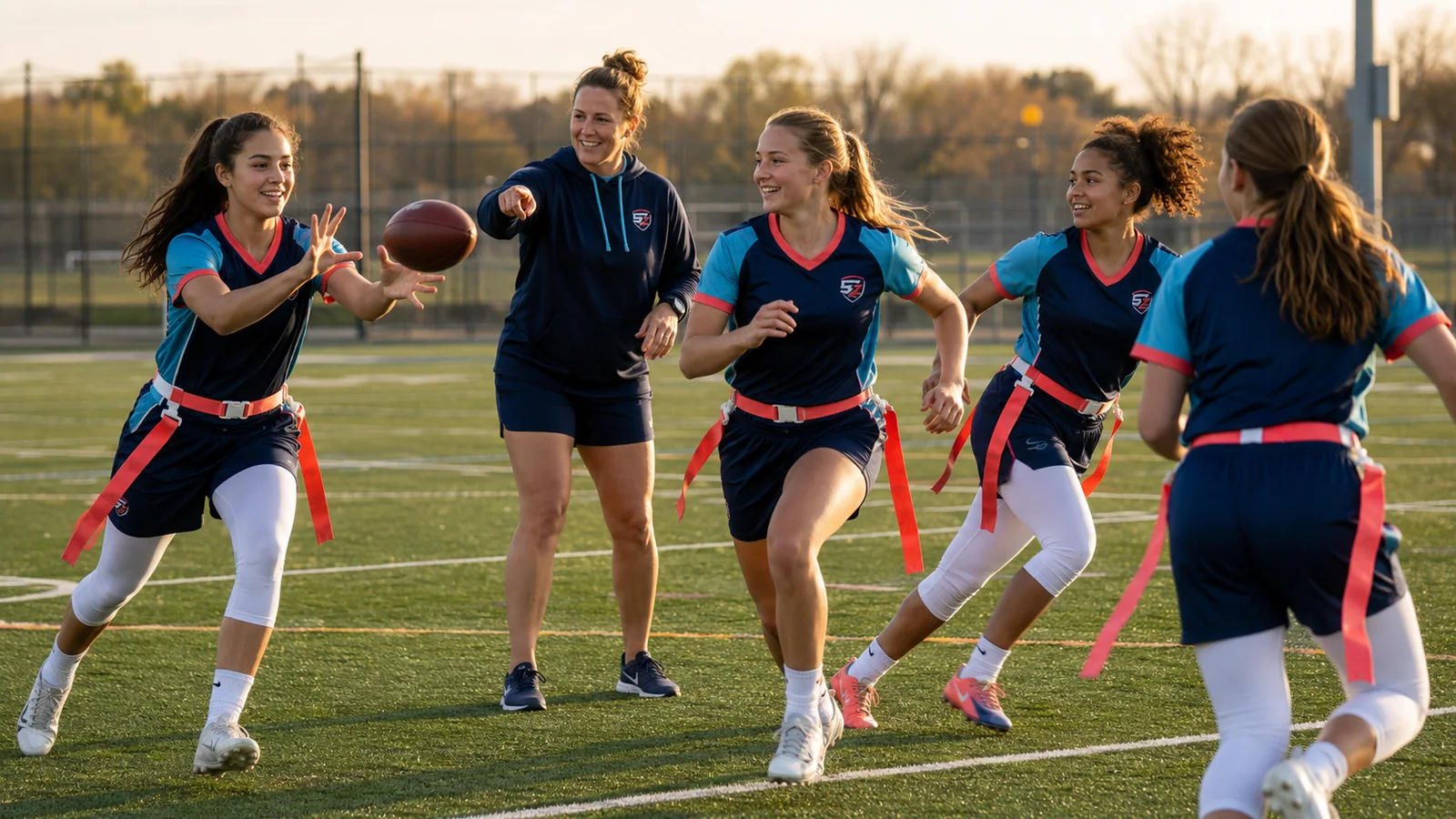
Flag football is a fast, non-contact format built around passing, route running, changes of direction and removing a flag from the ball carrier’s belt. The uniform therefore has to support movement while keeping the belt and flags unobstructed.
USA Football’s 2026 rules state that a jersey hanging below the belt line must be tucked in. They also prohibit shorts or trousers with belt loops, pockets, snaps, clips or zippers, and require flags to sharply contrast with the lower garment. Rules can vary by organizer and format, so always send the current league rulebook with the design brief and obtain written approval from the competition authority.
A good specification starts with a smooth waist area, secure but comfortable waistband, breathable fabric, readable numbers and enough contrast around the flag belt. Avoid bulky trim or loose panels that can interfere with flag access.
- Lightweight performance jersey with unrestricted shoulder movement
- Pocket-free shorts or trousers where required by the competition
- Flag colour that clearly contrasts with shorts or trousers
- Large, legible front and back numbers
- Flat seams and controlled garment length around the belt line
Design Adult Women’s and Youth Girls’ Fits Separately
A women’s pattern should not simply be a smaller men’s pattern, and a girls’ uniform should not be an adult garment scaled down. Adult and youth players need separate measurement charts, grading rules and sample checks. Ask for finished-garment measurements so coaches and parents can compare actual chest width, body length, waist range, hip allowance, rise and inseam.
For youth programs, prioritize coverage, comfort and room for natural movement. Offer a modest jersey length, more than one lower-garment option and inclusive sizing. For adult teams, confirm whether athletes prefer a relaxed, semi-fitted or athletic cut. Do not assign fit from age alone—use measurements and a sample-size set when possible.
Create one controlled roster showing player name, number, garment size and fit category. One person should approve the final roster before production. This reduces the most common personalization mistakes.
Choose Fabrics for Heat, Movement and Repeated Washing
Polyester performance fabrics are widely used for custom flag football jerseys because they can support moisture management, stretch and sublimation printing. The word ‘polyester’ alone is not a complete specification. Ask about fabric weight, knit structure, stretch direction, opacity, hand feel and test results relevant to your market.
For warm conditions, compare lightweight micro-mesh or interlock options. For cool-weather programs, consider a coordinated base layer or warm-up rather than making the game jersey unnecessarily heavy. Request a printed fabric swatch and, for a new program or large order, a physical pre-production sample.
Care instructions matter. Agree the wash label before production and share it with every athlete. Sublimated graphics are built into the fabric rather than sitting as a thick surface layer, but the garment still needs correct washing and drying to protect its shape, seams and colour appearance.
- Confirm fabric composition, weight and stretch
- Check opacity in both dry and damp conditions
- Review seam strength at shoulders, armholes and side panels
- Approve a colour strike-off under neutral light
- Test the jersey with the actual belt before bulk production
Build a Strong, Readable Team Identity
Sublimation can carry club colours, gradients, patterns, names, numbers and sponsor marks across the garment without a heavy printed layer. The strongest designs still use restraint: one dominant colour, one supporting colour and a high-contrast accent usually read better at speed than a crowded graphic.
Keep player numbers clear from a distance and separate them from complex textures. Confirm crest, sponsor and manufacturer-mark positions with the league before production. Only submit artwork your organization is authorized to reproduce, preferably in vector format.
Plan home and away colourways together if your schedule requires them. Shared typography and graphic lines create one identity, while a genuinely light and genuinely dark option can help avoid clashes.
A Practical 2026–2027 Team Order Timeline
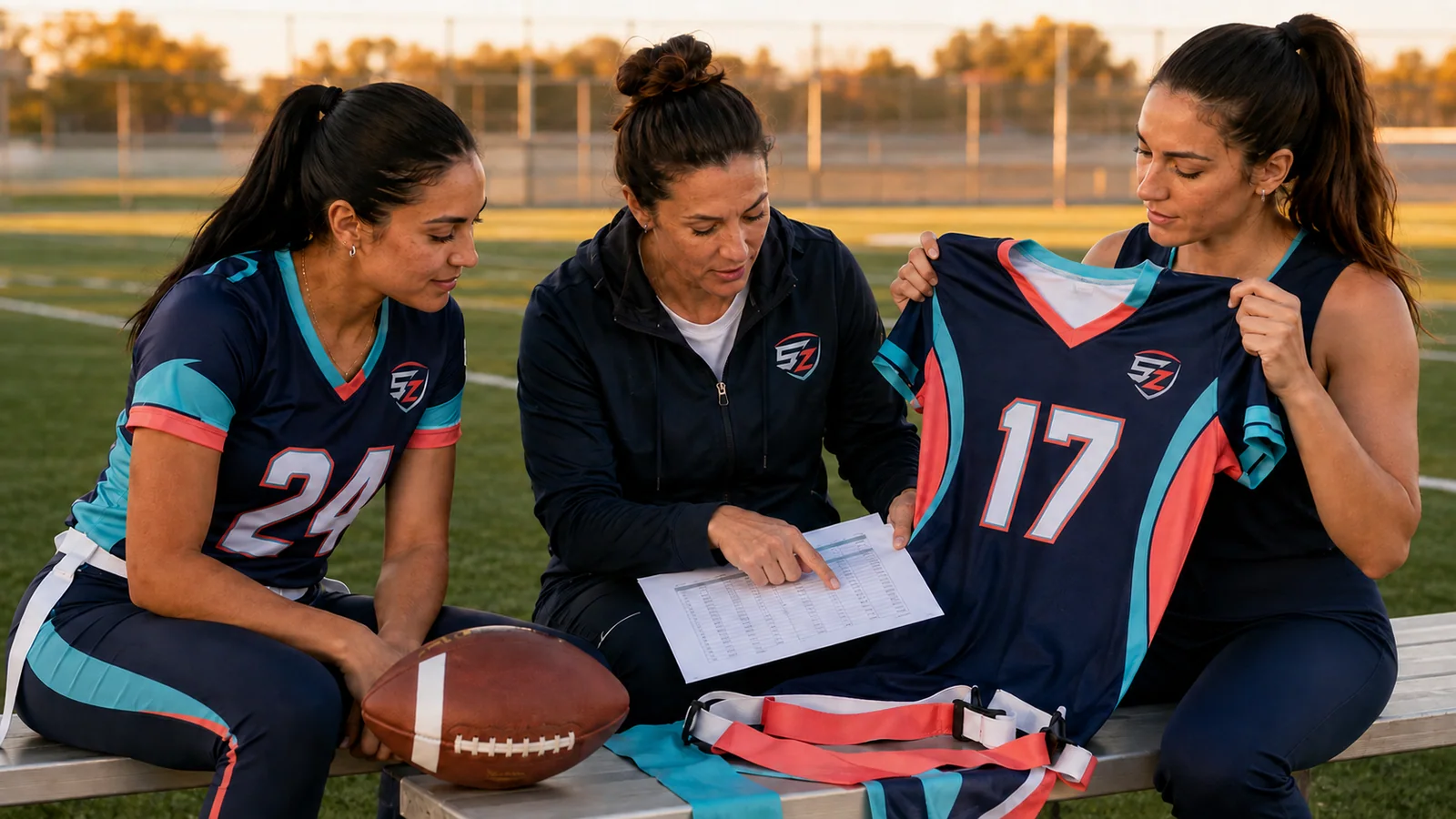
Work backward from the first match, not from the day training begins. Allow time for design, price confirmation, sample decisions, artwork revisions, roster approval, manufacturing, quality control, shipping and a sensible delivery buffer. A supplier can only give a reliable schedule after the quantity, customization, delivery address and approval process are known.
Do not advertise an arrival date to players until the supplier confirms it in writing. Design changes and late player lists can move the schedule. For repeat seasons, reserve the approved artwork, colour references, measurement chart and roster template so reorders are easier to control.
- Brief: quantity, age group, fit, colours, competition and required date
- Design: approve front, back and side artwork with number placement
- Fit: review measurement chart and sample-size requirements
- Roster: lock spelling, numbers and sizes in one final file
- Production: confirm start date only after written approval
- Quality control: check quantity, personalization and packing list
- Shipping: use the full postal code and add a delivery buffer
What Clubs, Schools and Distributors Should Request
A complete enquiry produces a useful quotation. State whether you need jerseys only or a coordinated package with shorts or trousers, belts, base layers, warm-ups, socks, bags and custom packing. Include your destination because freight, duties and delivery options vary by country.
Schools and youth organizations should identify safeguarding, modesty and labeling requirements at the start. Distributors and private-label buyers should also confirm woven labels, hangtags, barcodes, polybag warnings, carton marks and any market-specific compliance documents required for their sales channel.
Ask the supplier to itemize the product price, customization, samples, shipping and any additional charges. Written scope and approval records are more valuable than a vague ‘all included’ message.
2026–2027 Flag Football Uniform Buying Checklist
Use this checklist before requesting a custom women’s or girls’ flag football quotation. It helps a manufacturer price the same product you are actually planning to buy.
- Women’s, girls’ or mixed age-group fit requirements
- Team quantity plus spare jerseys and expected later additions
- Current competition rulebook and uniform restrictions
- Jersey, shorts or trousers, flag belts and optional accessories
- Adult and youth size breakdown using finished-garment measurements
- Club crest, sponsor artwork, colours, names and numbers
- Preferred fabric, printing method and sample requirement
- Custom labels, packing, carton marks and reseller needs
- Delivery country, postal code and must-arrive date
- Written quotation and approval-to-delivery schedule
Start Your Custom Women’s or Girls’ Flag Football Project
Skyzone Impex works with clubs, schools, academies, retailers and teamwear distributors on custom sports uniforms. Send your quantity, age group, sizes, logo files, colours, destination and season deadline to begin a women’s or girls’ flag football discussion.
Ask for a written quotation and production plan based on your exact specification. Final price, minimum quantity, sample cost, lead time and shipping depend on the approved garment, order size and destination.
Buyer FAQ
What should girls wear for flag football in the 2026–2027 season?
Use a league-approved jersey, pocket-free shorts or trousers where required, suitable footwear and a contrasting flag belt. Requirements vary, so coaches should check the current competition rulebook before ordering.
Can women’s and girls’ flag football uniforms be fully customized?
Yes. Team colours, patterns, logos, sponsor marks, player names and numbers can be included subject to artwork rights, technical review and league approval.
Is sublimation suitable for flag football jerseys?
Sublimation is a common option for polyester performance jerseys because it supports detailed all-over graphics without a thick surface print. Approve the fabric, colour strike-off and sample before bulk production.
Should adult women and girls use the same size chart?
No. Use separate adult and youth measurement charts and choose sizes from finished-garment measurements. A sample-size set is helpful for larger teams.
Are pockets allowed in flag football shorts or trousers?
USA Football’s 2026 rules prohibit pockets, belt loops, snaps, clips and zippers in the relevant lower garments. Your organizer may use a different rule set, so verify locally.
How early should a team order custom flag football uniforms?
Begin as early as practical and work backward from the first match. Design approval, sampling, roster confirmation, production, quality checks, shipping and a delivery buffer all need time. Request a written schedule for the exact order.